performance, race, and the law
Bowdoin College, fall 2026
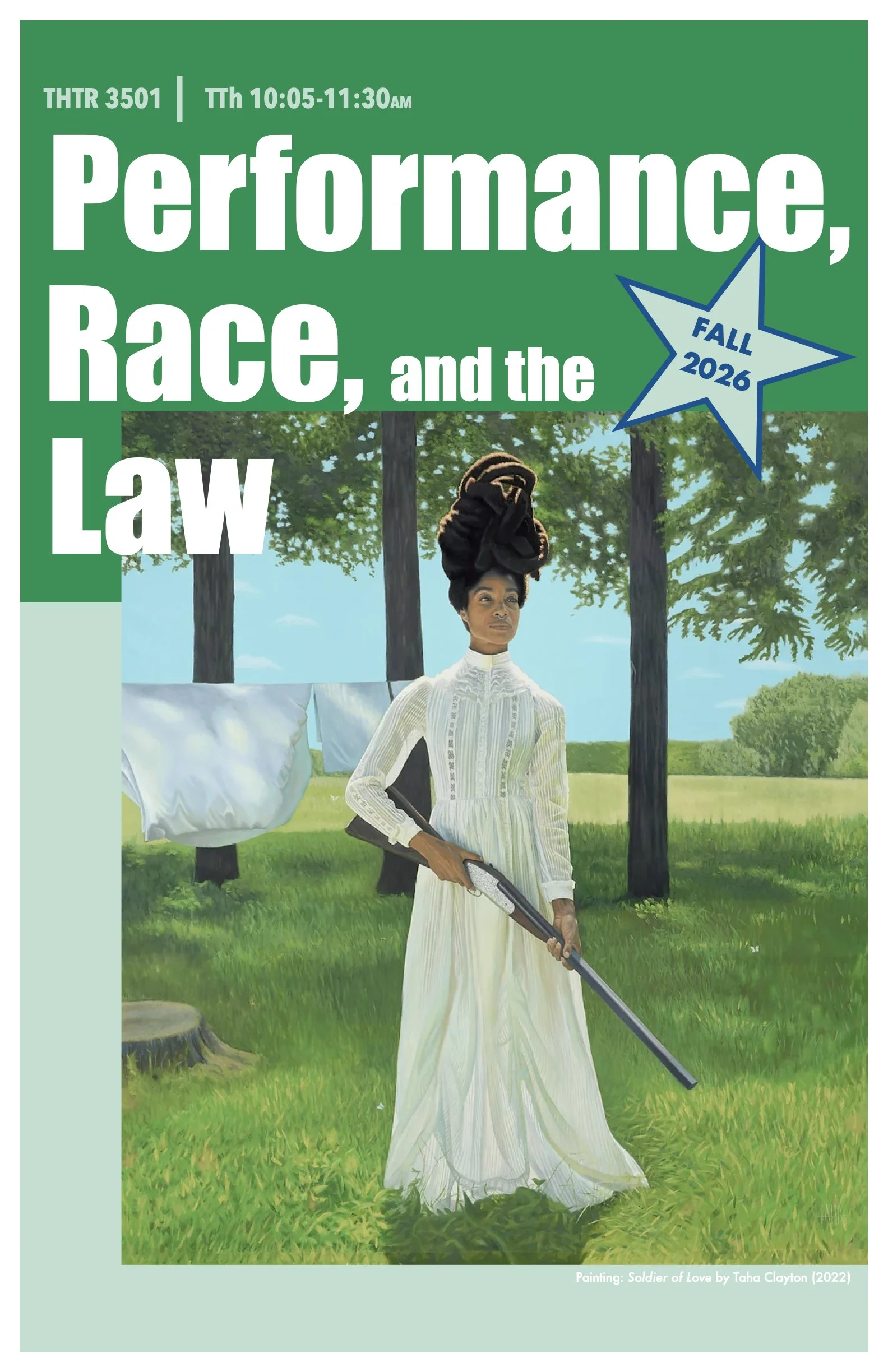
how can we better understand the intersections of race and the law? what is the difference between the law as it is written and as it is enacted on our bodies?
This course will examine how racial identity in the United States is co-produced through formal legal decisions (court cases and laws), popular aesthetic forms such as theatre and film, and everyday public performances. Through readings, viewings, writing assignments, class presentations, and performances, students will investigate how legal rights are “performed” everyday—and how social constructions of race determine which legal rights can be fully enacted and by whom. Beginning with the Virginia Slave Codes of 1705 and continuing through contemporary criminal and immigration law, students will use performance theory to analyze the distinctions between the law-as-written and the law-as-performed, while also exploring the everyday performnces and cultural products that have shaped understandings of racial difference at key moments in U.S. history. The course will culminate in a student-created project that reveals the intersections between performance, race, and the law.
who should take this class?
Anyone who is interested in 1) how race and the law influence one another in the United States; 2) the difference between the law as written and the law in action.
are there any prerequisites?
No
Do I have to be a theater major?
No—anyone who wants to think about the intersections between race, performance, and the law is welcome
Do I have to be a Senior?
No, students of all levels have been successful in this seminar-style course
Questions?
Email Dr. Lindsay Livingston (llivings@bowdoin.edu)